
Indoor LED Screens vs. Outdoor LED Screens – How to Choose the Right One for Your Project?
This article explains that indoor and outdoor LED screens should be chosen based on project environment. Indoor screens prioritize image quality and viewing comfort—pixel pitch, brightness, grayscale, viewing angle, and power consumption. Outdoor screens prioritize safety and reliability—true waterproofing, heat dissipation, wind resistance, and certifications. In short, indoor is about clear viewing; outdoor is about reliable operation. Budget defines the selection range.
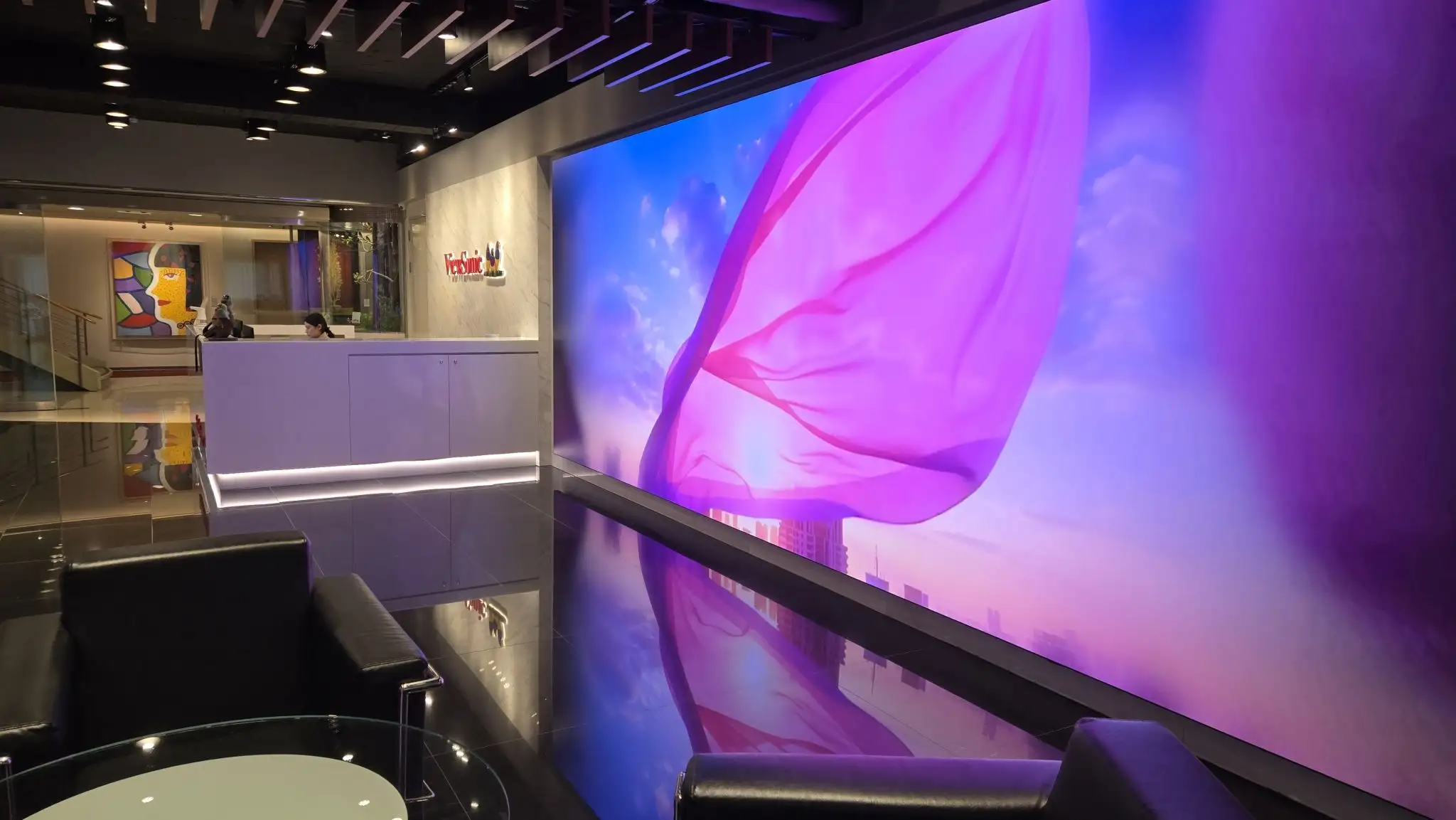
1. For Indoor Projects
Your project environment is already determined — either indoor or outdoor. The question you're facing now isn't "which one should I choose," but rather "how do I tell which product is reliable for this specific scenario?"
Indoor environments are relatively controllable, but close-up viewing demands exceptional image quality and resolution. Here are the key areas you need to focus on:
1.1 Resolution & Pixel Pitch
Directly determines image clarity. The core purpose of an indoor screen is crisp image quality and high resolution. Viewers stand just a few meters away — sometimes even 1-2 meters. If the pixels are too coarse, the image looks like a mosaic.
Common pixel pitches for indoor screens range from P0.9 to P2.5. Which one you choose depends on your viewing distance. As a general rule of thumb: viewing distance (in meters) ≈ pixel pitch (in mm) × 2–3. For example, a P1.5 screen would have a recommended viewing distance of approximately 3–4.5 meters.
Before purchasing, first determine: what's the closest distance your audience will be standing? From that position, is the pixel graininess acceptable? The answer to this question will directly help you narrow down the right pitch range.
1.2 Brightness
800–1500 cd/㎡ is sufficient — higher isn't always better. For indoor screens, 800–1500 cd/㎡ is perfectly adequate. Too much brightness will actually strain viewers' eyes in an indoor setting, and it will accelerate LED aging.
If a supplier pushes an indoor screen with brightness exceeding 2000 cd/㎡, be cautious — they might be trying to offload outdoor inventory, or using high brightness to mask poor color or grayscale performance.
1.3 Grayscale
The key to image quality. Indoor screens are viewed up close — color transitions and dark detail clarity are immediately noticeable at short distances.
Grayscale is typically expressed in bits; 14-bit is the minimum acceptable standard, while 16-bit is considered excellent. If your project involves high-definition video, images, or detailed charts and data displays, grayscale performance will directly affect the final visual result.
Before signing the contract, ask the supplier for a real-life recording of a 0–5% grayscale gradient test. If the dark areas show visible color banding or blockiness, the grayscale is substandard.
1.4 Viewing Angle
The most common trap in indoor screens. In indoor spaces, viewers are not all sitting directly in front of the screen — some are off to the side, others are passing by at an angle. The viewing angle directly determines what viewers at different positions actually see.
Indoor screens typically require horizontal viewing angle ≥160° and vertical ≥140°. If the angle is too narrow, viewers on the side will see discolored, dim, or even completely illegible images.
When purchasing, ask the supplier: what are the horizontal and vertical viewing angles of this screen? If the horizontal angle is below 160°, proceed with caution. After installation, it's also easy to verify by checking the screen from various angles on site.
1.5 Power Consumption
Do the math on electricity costs. Although indoor screens consume less power than outdoor ones, power consumption differences between different solutions at the same size and brightness can reach 20–30%. If the screen runs 12 hours a day, that's thousands of dollars in electricity cost difference over a year.
When purchasing, ask: what are the typical and maximum power consumption figures for this screen? If it uses common-cathode energy-saving technology, power consumption can be reduced by 20–30% compared to traditional designs. Asking this one question can save you a lot later on.
2. For Outdoor Projects
Outdoor environments are harsh — wind, rain, sun, and temperature swings. While indoor screens prioritize "image quality," outdoor screens prioritize "safety" and "reliability." Here are the key areas you need to focus on:
2.1 IP65 – What You See Is Only the Front Side
IP65 refers to the protection rating of the front of the LED screen — dust-tight and protected against water jets. But many buyers don't realize that the back side often does not meet the same standard.
The back side relies mainly on structural design and sealant layers — it offers some water resistance but is not fully waterproof. In prolonged heavy rain or standing water, the back remains vulnerable to water ingress.
2.2 Fully Waterproof Cabinet
The real solution. To achieve true full waterproofing, you need either a fabricated steel (sheet metal) cabinet or a new-generation integrated waterproof design.
Steel cabinets achieve overall sealing through structural design — water cannot penetrate from any direction. Newer products solve waterproofing at the cabinet level using materials and process innovations, without requiring additional external protection.
When purchasing, confirm with the supplier: what type of cabinet do you provide? Is it a fully waterproof steel cabinet, or a standard cabinet with sealant treatment? The waterproofing effectiveness and cost differ significantly between the two. Remember: outdoor screen reliability starts with the cabinet design.
2.3 Heat Dissipation
Can the screen handle summer heat? Outdoor screens generate substantial heat at high brightness, and direct summer sunlight pushes cabinet temperatures even higher. The traditional solution is to install air conditioning units — but air conditioners add cost, require extra power, and need maintenance.
Newer products in the industry now solve heat dissipation through optimized structure and design, without needing separate air conditioning.
When purchasing, ask the supplier: what is the heat dissipation solution for this screen? Does it require air conditioning? If so, what's the power rating? If it's a no-AC solution, how reliable is it? Suppliers who can clearly answer these questions have solid experience with outdoor products.
2.4 Structural Safety & Wind Load Resistance
Outdoor screens are mounted on rooftops or high elevations — wind resistance is a matter of safety. This isn't about "how well it performs" — it's about "whether it could fail catastrophically."
When purchasing, ask the supplier: what wind load rating (in terms of wind speed or Beaufort scale) does the supporting steel structure meet? What material specifications are used for the steel? What welding standards are applied? If the answer is just "don't worry, it's fine" without specific data, be cautious.
2.5 Certifications & Compliance
So the product can enter and be installed legally. This is one of the most overlooked areas. Your project is in a specific country or region, and local regulations typically require specific certifications for electronic and outdoor equipment. Without the proper certifications, you may face: customs clearance delays or rejection, inability to use the product legally on site, lack of insurance coverage, or even fines.
Common certifications include CE (EU market access), FCC (US electromagnetic compatibility), UL (US product safety), and RoHS (restriction of hazardous substances). If your project is in the EU, CE is a basic requirement — without it, the product cannot be legally installed. If in the US, FCC and UL should be priorities.
When purchasing, ask directly: "What certifications does this product have? Can you provide the certificates? Do they cover my project's country?" Suppliers who can provide clear documentation demonstrate that their product has undergone proper testing and that they have export experience. Those who can't produce any certifications present a much higher risk.
3. In the End, It Comes Down to a Few Things
The logic for selecting screens is fundamentally different for indoor and outdoor projects.
Indoor is about image quality — resolution, grayscale, viewing angle, power efficiency. The essence of an indoor screen is "making sure viewers see clearly and comfortably."
Outdoor is about safety and reliability — true waterproofing, structural integrity, thermal management, and proper certifications. The essence of an outdoor screen is "staying operational no matter what the weather throws at it."
Budget determines the range within which you can make your choice. Once you know your budget, communicate that number to the supplier and ask them to recommend the most suitable product within that range. This is far more efficient than asking for quotes with unlimited requirements, and more reassuring than second-guessing every low quote or feeling overcharged by every high one.
Get clear on your installation environment and budget range, ask each of the questions above one by one, and you'll naturally know what to choose.
Ready to Transform Your Visual Space?
Our team of experts is ready to help you find the perfect LED display solution for your project.
Contact Us Today